"Super stargazing tour in Atacama desert, few minutes drive from san Pedro, way more than 5 stars :) We loved the passioned explanations of our guide Ich, we were lucky to be in a small group so we had plenty of time to use the telescope and ask questions. Finally, lovely picture as souvenir and good bye snacks"
Do It Yourself
Stargazing Without a Tour
What you can see alone, and what a tour adds.
From
$38
per person
Free cancellation
- 4.6 / 5 70+ Reviews
- About 2.5 hours Duration
- 4 Languages Guide Options
- Hotel Pickup Included
- Free Cancellation
Book Your Experience
Check Availability & Prices
Select your preferred date and time. Instant confirmation — free cancellation up to 24 hours before departure.
The Experience
What AstrotourChile Adds to a Night Out
Hotel pickup, high-grade telescopes, a guide, capes and blankets, from $38 per person.
Highlights
- Planets, galaxies, star clusters and stars through high-grade telescopes
- An informal talk with time for every question
- An aperitif and snack under the stars
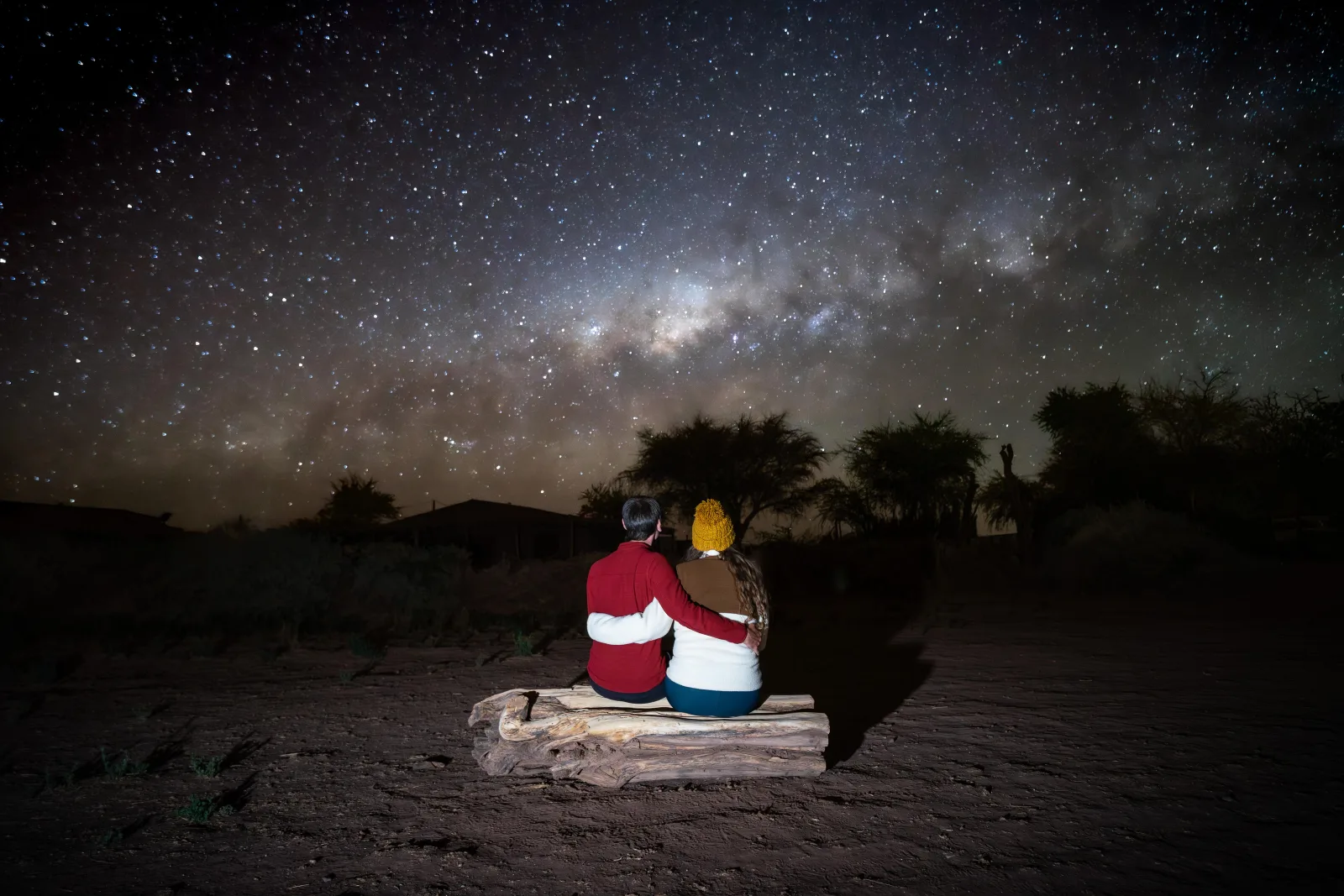
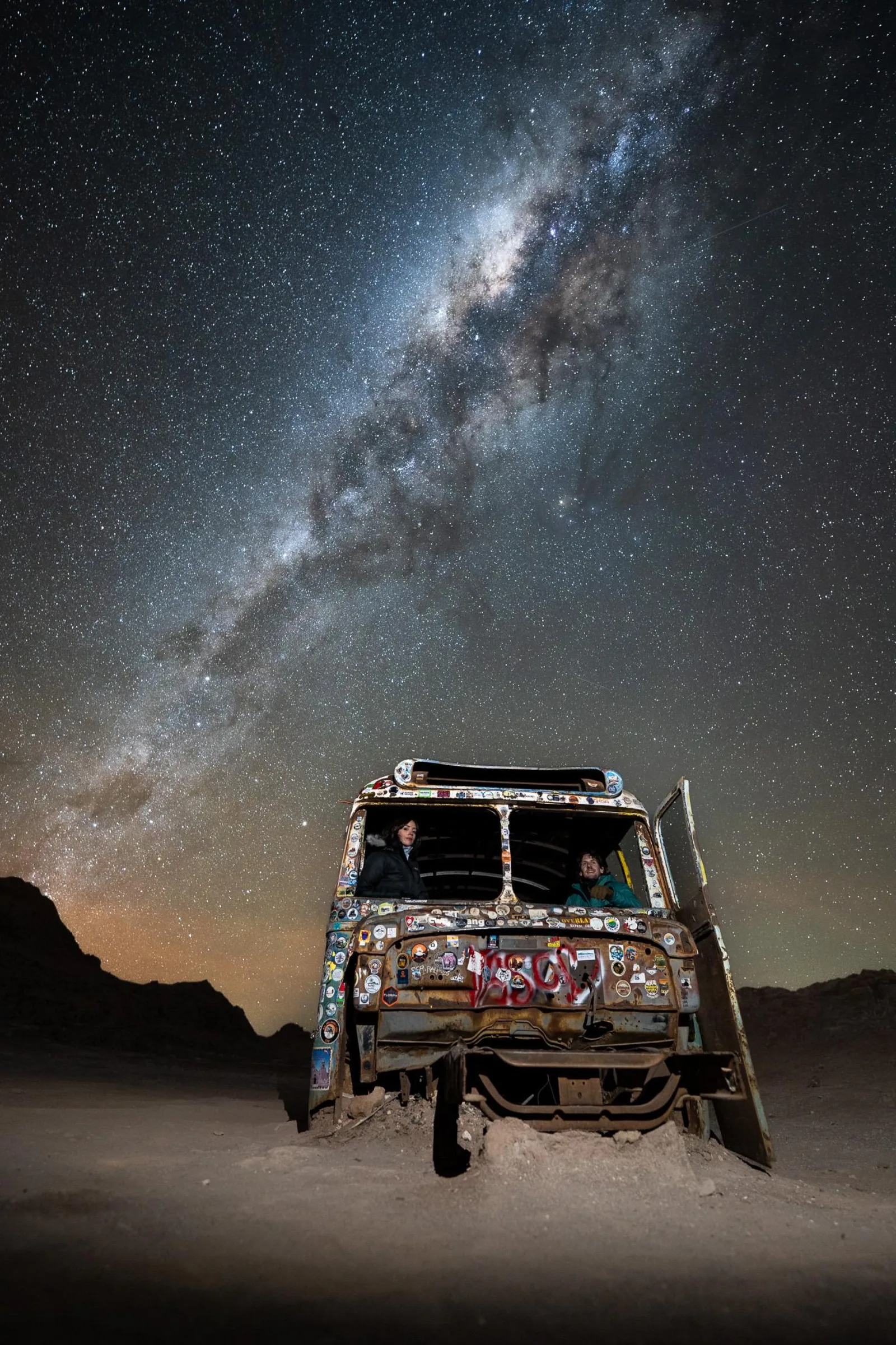
- A professional souvenir photo against the night sky
- Guides in Spanish, English, French or Portuguese, with no more than two languages per group
What's Included
- Transfer to and from your accommodation in San Pedro de Atacama
- Certified astronomy guide in English, French, Portuguese or Spanish
- Observation through high-grade telescopes
- Appetizer and snack with drinks such as wine, coffee or tea
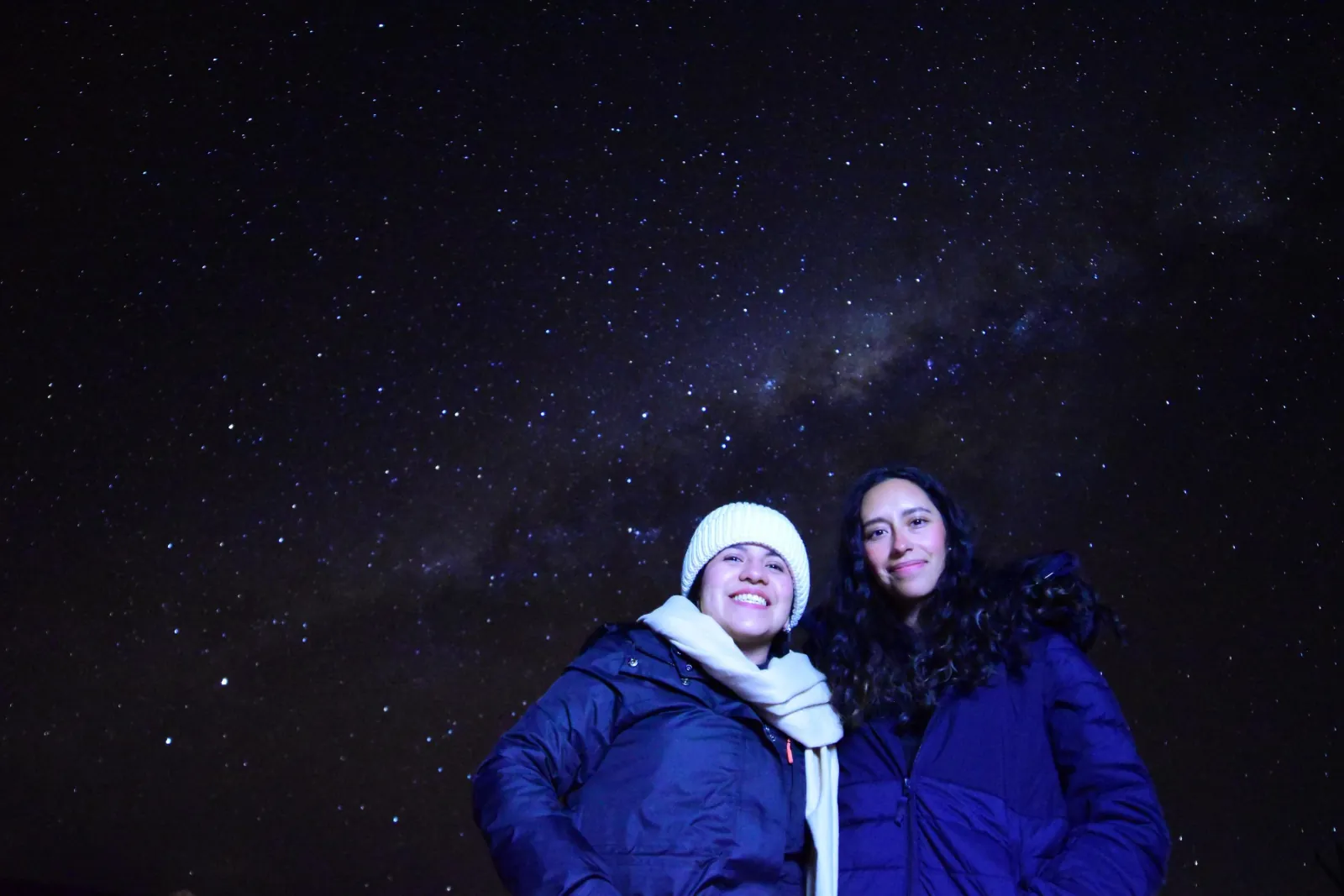
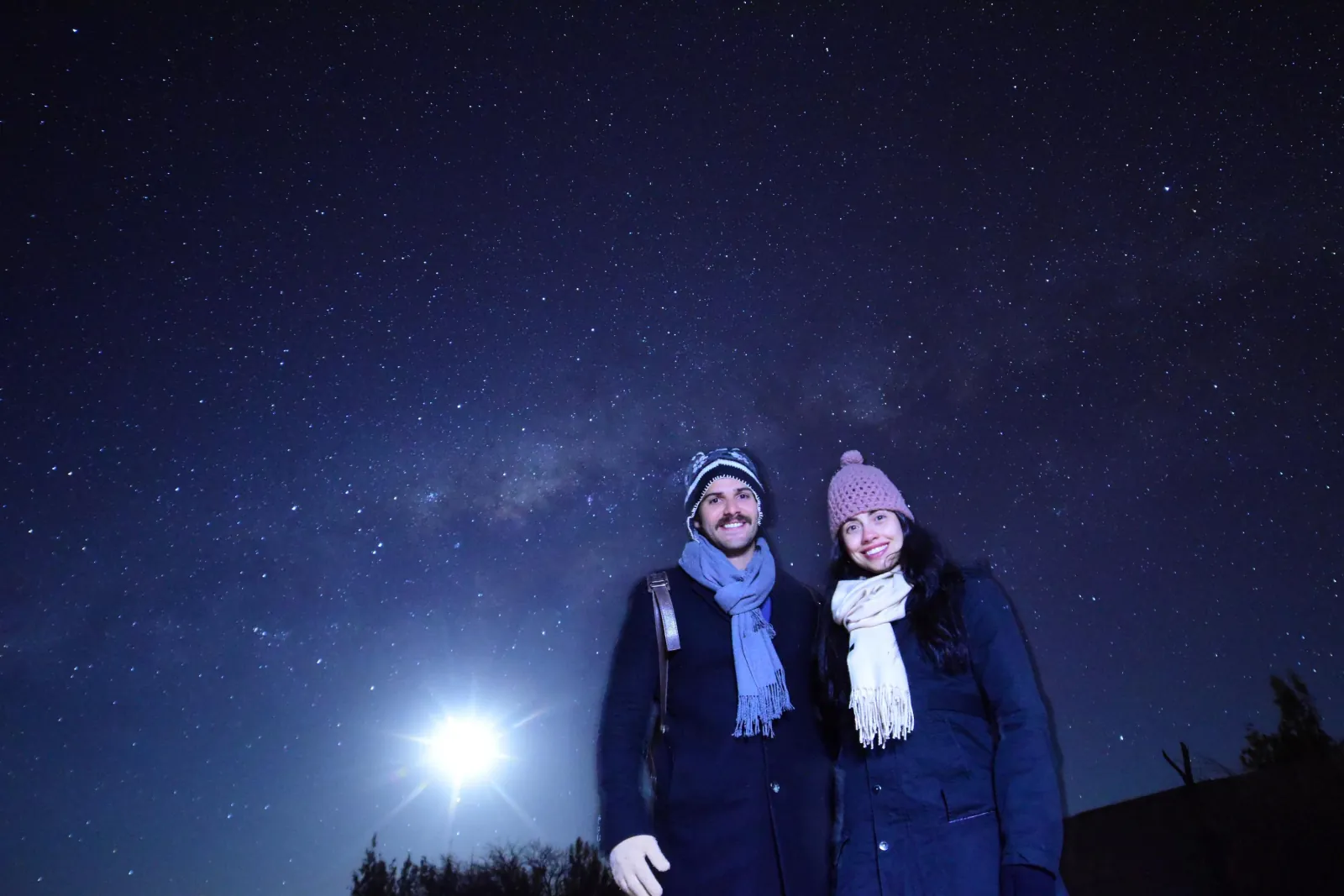
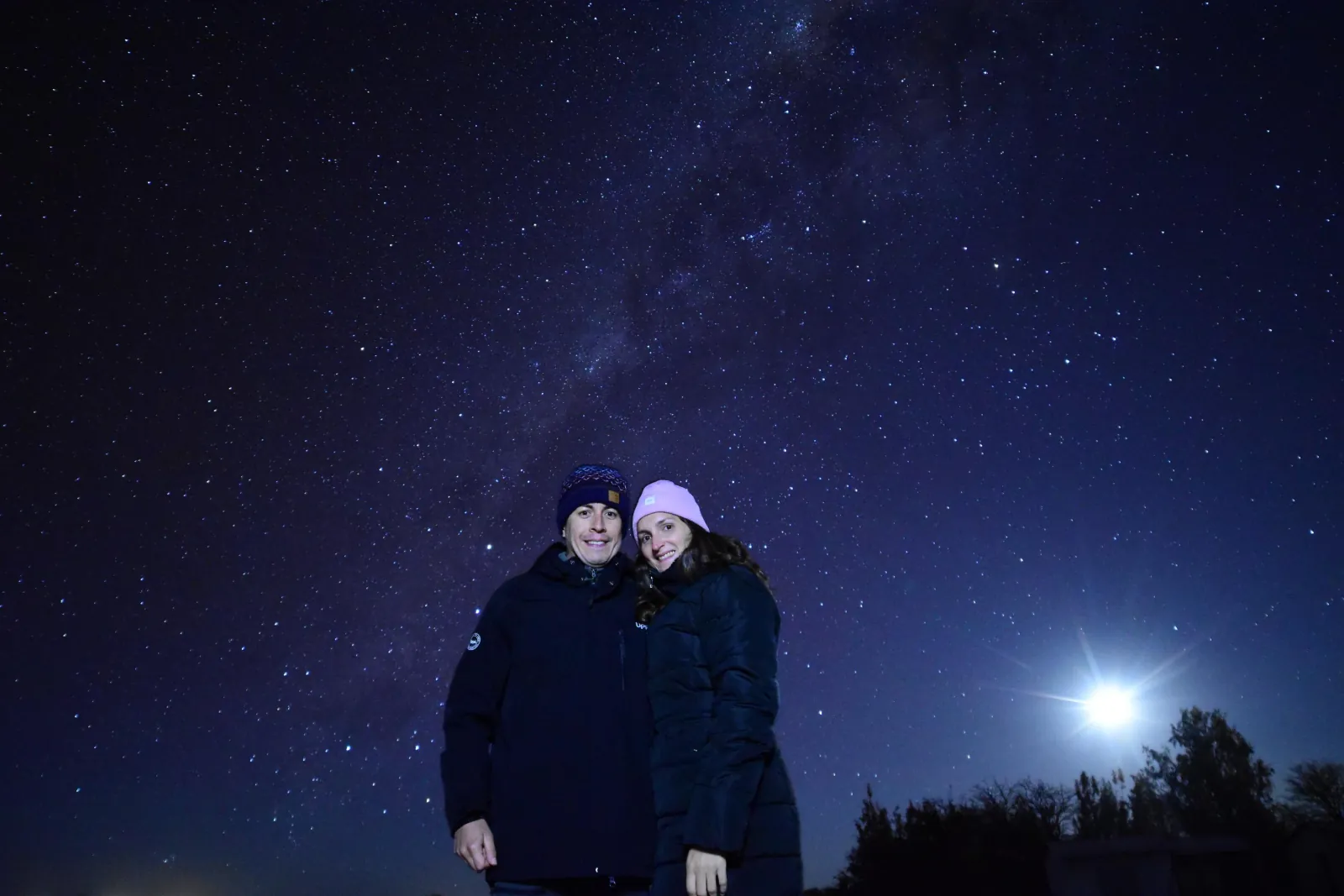
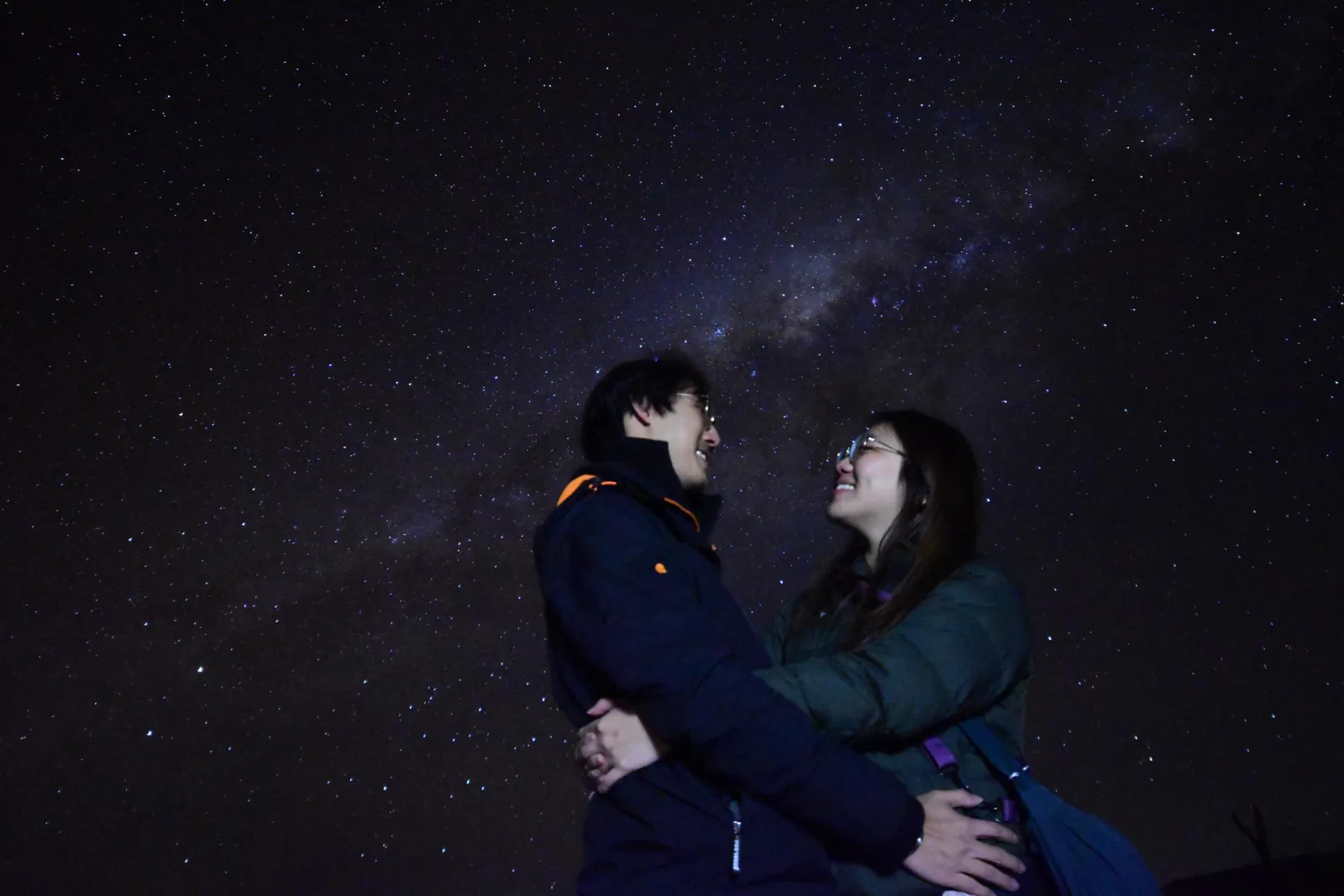
- Astrophotography: a souvenir photo with the night sky
- Capes and blankets, plus restrooms at the site
How the AstrotourChile Night Works
From your accommodation to a dark site and back, with telescopes and a photo in between.
Pickup from your accommodation
You are collected from your accommodation in San Pedro. Pickups from Ayllu de Coyo, Tulor, Cucuter, Solor and Quitor are not included.
A guided tour of the sky
A certified astronomy guide walks you through the sky and answers questions, with capes and blankets for the chilly night air.
High-grade telescopes
Observe planets, galaxies, star clusters and stars through high-grade telescopes, with an appetizer and snack under the stars.
Your photo and the drive back
Take home a professional photo with the night sky behind you, then get dropped back at your accommodation.
Can't Make These Dates?
Browse More Available Options
Find a tour that fits your schedule — all with instant confirmation and free cancellation.
Photo Gallery
Nights with AstrotourChile
Guests and the Milky Way at a dark site outside San Pedro de Atacama.
On Your Own or With a Guide
Two guided tours that add telescopes for under $40, and what a night alone gives you.
| Feature | HOTEL PICKUP AstrotourChile | Llama Stargazing | On your own |
|---|---|---|---|
| Price from (per person) | $38 | $33 | Free |
| Rating | 4.6 (70 reviews) | 4.7 (820+ reviews) | — |
| Getting there | ✓ Pickup from your accommodation | Meeting point in town, 15-minute drive | Walk to the edge of town |
| Darkness | Dark site outside town | Dark site outside town | Some light from San Pedro |
| Telescopes | ✓ High-grade telescopes | ✓ Telescopes | ✗ Binoculars if you bring them |
| Guide | ✓ Certified astronomy guide | ✓ Astronomer guide | ✗ An app or star chart |
| Photo of you | ✓ Professional souvenir photo | ✓ Photos with the stars | Hard with a phone |
| Warmth | Capes and blankets | Blankets, hot drinks | Your own layers |
| Check Availability | See Llama Stargazing |
Compare Tours
More Atacama Stargazing Tours
From a $31 Andean astronomy night to a private 4x4 trip for four.
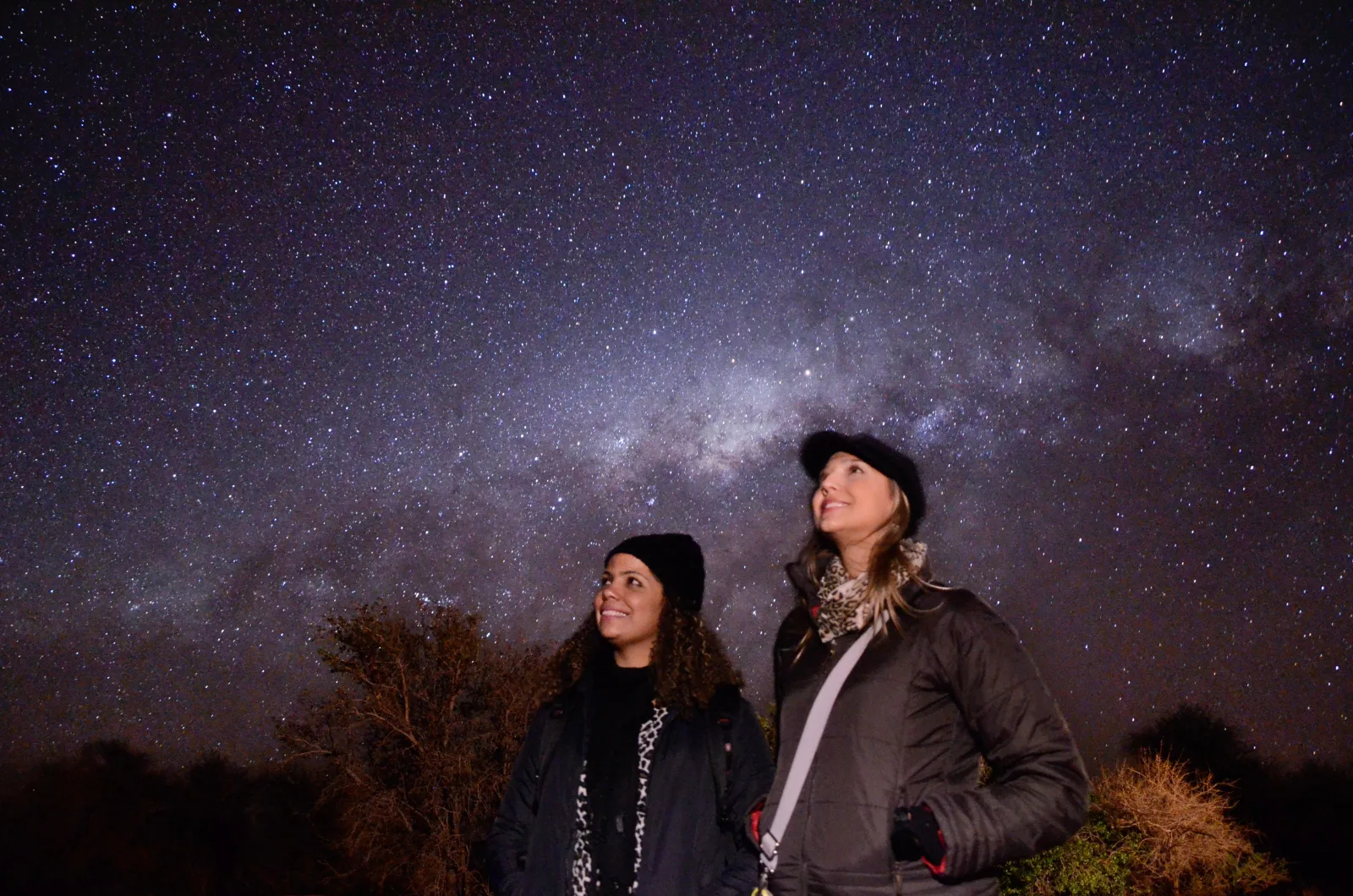 BUDGET PICK
Atacama: Stargazing & Andean Astronomy with Wine
The lowest-priced tour we cover: modern astronomy and telescopes paired with Andean sky lore, including the dark constellations, with a poncho, wine and a free photo.
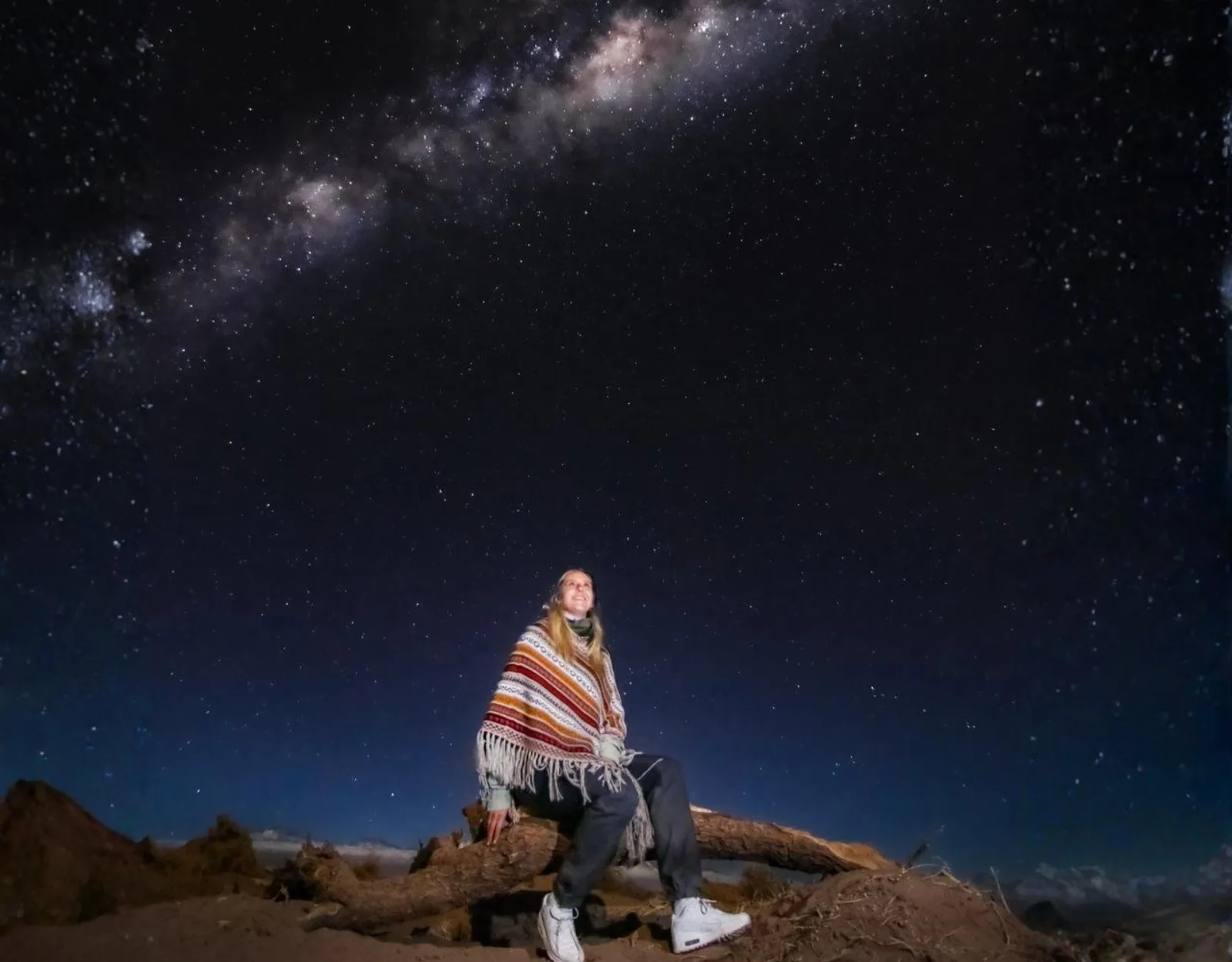 PHOTOS + TASTING
Atacama: Astronomical Excursion with Stargazing, Photos, Snacks and Wine
A larger, tightly run evening that splits guests by language, alternating a telescope session with a one-on-one photo shoot, then ends with wine, cheese and salami under the stars.
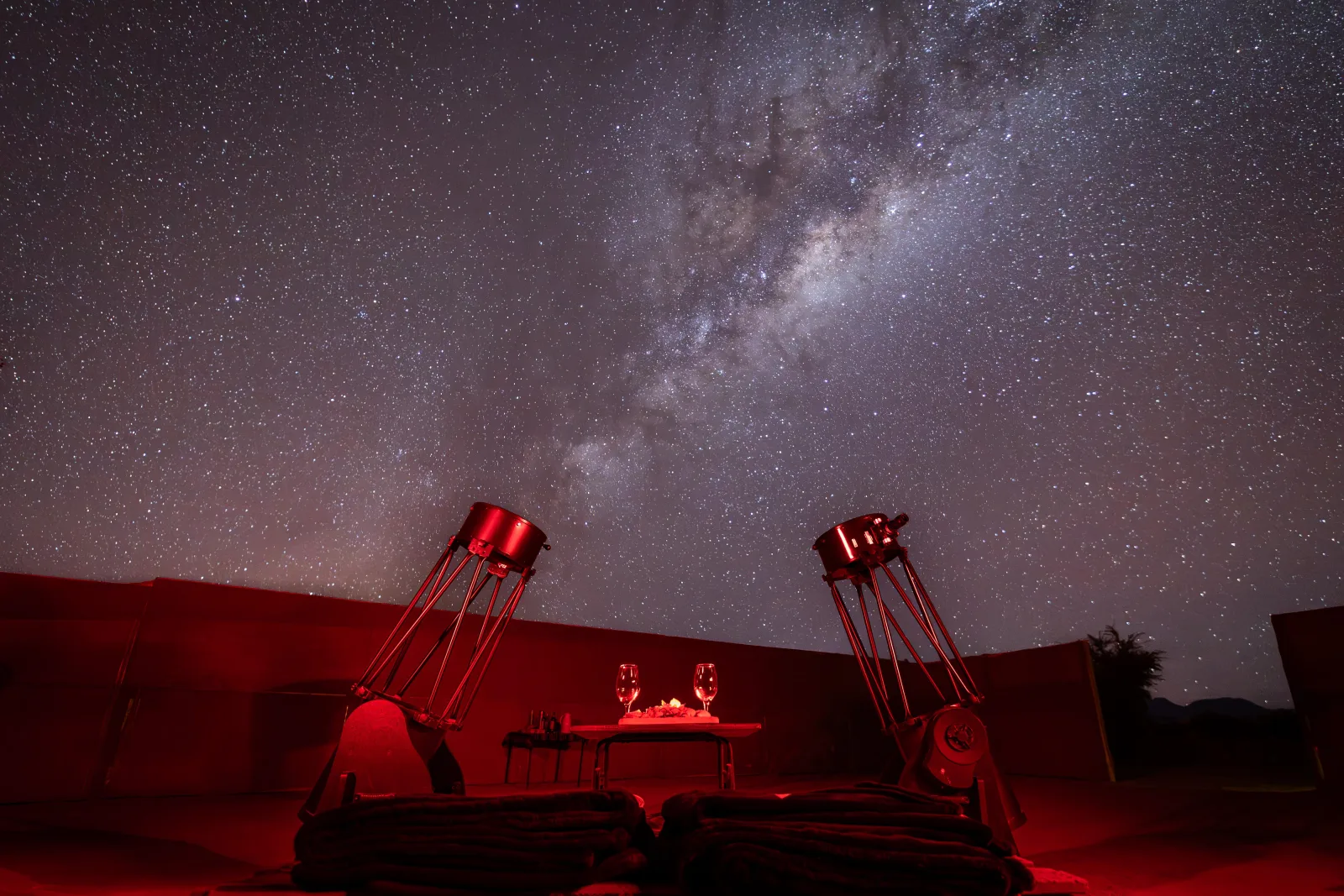 16-INCH TELESCOPES
The Roofless Experience Premium stargazing San Pedro Atacama
A premium small-group tour built around two 16-inch telescopes, run only when the moon is under 50% lit, with hotel pickup, thermal blankets, wine and a professional portrait.
 ASTROPHOTOGRAPHER
Atacama: Pro Guided Stargazing & Astrophotography
A tour with a dedicated astrophotographer and three photos per person, a 12-inch telescope plus a smart telescope, lounge chairs, blankets and a cocktail hour.
 MAX 4-6 GUESTS
Atacama: Stargazing tour Into Our Universe
A private-style night for up to a handful of guests: 4x4 pickup to Vallecito, reclining chairs, a smart telescope that captures color images, and Milky Way photos on a night walk.
Self-Guided Guide
Stargazing in Atacama on Your Own
Where you can watch the sky from San Pedro without a guide, where you can't go at night, and what a tour adds.
Yes, you can stargaze in the Atacama without a tour, and the sky itself is free. Walk to the dark edge of San Pedro on a moonless night, give your eyes time to adjust, and you will see far more stars than at home, often with the Milky Way overhead. What you won’t have is a telescope, a guide to name what you’re looking at, or legal night access to the best-known landscapes, and that is what a tour like AstrotourChile’s Astronomical Tour and Astrophotography adds, from $38 per person with hotel pickup.
What you can see from the edge of town
San Pedro sits at about 2,400 m (7,900 ft) under some of the driest, darkest skies on Earth, and on a clear, moonless night the sky above town is very good. Street lighting in the center will wash out the faintest detail, so walk to the edge of town, put the lights behind you, and give yourself a few minutes away from any lamp.
From there, with the naked eye, you can expect a dense field of stars and, at the right time of year, the Milky Way. The core of the Milky Way is high in the evening from roughly June to September, nearly overhead around 22:00 in June and July. The Large Magellanic Cloud is best on evenings from November to March and the Small Magellanic Cloud from September to January. The Southern Cross is best on evenings from March to June.
The Magellanic Clouds, planets and meteors
The Large and Small Magellanic Clouds are neighboring dwarf galaxies. To the naked eye they look like two detached patches of pale cloud, not spiral galaxies, and that is the thrill: those fuzzy patches are whole galaxies outside our own, and most visitors from the Northern Hemisphere have never seen them. No telescope is needed.
The Southern Cross is smaller than most newcomers expect. Alpha and Beta Centauri, the bright pair called the Pointers, lead your eye to it, and a stargazing app makes it much easier to find the first time.
Mercury, Venus, Mars, Jupiter and Saturn can all be seen with the naked eye when they are above the horizon at night. They look like unusually bright, steady stars, and an app tells you which ones are up during your visit. What you can’t see unaided is the detail: Saturn’s rings, Jupiter’s cloud bands and moons, or markings on Mars. Our guide to the planets visible from the Atacama lists the coming months.
Meteors need no equipment at all. Lie back somewhere safe, face a large open stretch of sky and give it time; even outside the main meteor showers you may catch a few. Satellites drift across the sky too, mostly in the first hours after dark.
Where you can’t go at night
The obvious idea, stargazing in Valle de la Luna, doesn’t work. The reserve opens from 09:00 with last entry around 17:30, and visitors can stay for sunset, but there is no night access. Adult tickets were CLP 10,800 in 2025–26. Our guide to where to stargaze near San Pedro covers the areas that do work at night.
Driving out into the desert on your own after dark is discouraged. Desert tracks are unlit, and SPACE, an observatory near town, advises telling the police your plans before any remote 4x4 trip. The tours drive 15 to 30 minutes out of town to sites they know, which is the part that is hard to copy safely on your own.
Los Flamencos and other protected land
Much of the landscape around San Pedro lies inside Reserva Nacional Los Flamencos or on land managed by the local Atacameño communities. CONAF, Chile’s national forest and parks service, sets access rules and opening hours for each sector of the reserve, Valle de la Luna included, and visitors are expected to follow ranger and community instructions. Empty-looking desert is not open land. Don’t stargaze:
- inside Valle de la Luna or any other reserve sector after closing
- on private land or behind closed gates
- at an astronomy operator’s observing site without permission
- on narrow road shoulders, or just past a bend where drivers can’t see you
- on unmarked desert tracks
- at high-altitude attractions outside their visitor hours
If you do stop a car, use a proper pull-off with the vehicle fully off the road, and don’t walk far from it in terrain you don’t know. Pick your spot for safety and access first, darkness second.
How to plan a DIY night
The moon matters more than anything else you control. The darkest week is roughly new moon plus or minus four days. A first-quarter moon sets around midnight, so the hours after it sets are dark; a last-quarter moon rises around midnight, so the early evening is dark.
| Month | New moon | Full moon |
|---|---|---|
| October 2026 | 10 Oct | 26 Oct |
| November 2026 | 9 Nov | 24 Nov |
| December 2026 | 8 Dec | 23 Dec |
| January 2027 | 7 Jan | 22 Jan |
| February 2027 | 6 Feb | 20 Feb |
| March 2027 | 8 Mar | 22 Mar |
A few habits help:
- Let your eyes adapt. It commonly takes 20 to 30 minutes in the dark before you see the faintest stars, and a white light undoes much of that.
- Use a red light. A red flashlight, or a phone’s red-screen mode, keeps your night vision.
- Dress for near-freezing nights in winter. Average lows are below 0 °C (32 °F) in June and July. Our guide to how cold Atacama stargazing gets has the monthly figures.
- Check the clock. Full darkness comes around 19:15 in June and around 21:45 in December.
- Bring a stargazing app or a star chart, and binoculars if you have them.
Clouds are most likely in January and February, during the Altiplanic winter. Our best time for stargazing guide covers each month. A new moon doesn’t guarantee a good night either: cloud, haze, dust and wind still spoil it, which is also why tours sometimes cancel. Look at the forecast and the sky itself, not only the calendar.
What time to go out
Right after sunset the sky still passes through civil, nautical and astronomical twilight. For the darkest sky, wait until astronomical twilight ends, which is the “full darkness” time above. It shifts through the year, so check your exact date in an app such as Stellarium or PhotoPills, or a twilight calculator. Tour departures shift with it, later in summer than in winter.
How long to stay out
Give yourself at least an hour. The first ten minutes are often the least impressive, because your eyes are still adjusting.
- First 10 minutes: find north and south, the moon, the brightest planets and the Southern Cross.
- 10 to 30 minutes: let your eyes adapt and stop checking your phone.
- 30 to 60 minutes: look for the structure in the Milky Way, its dark lanes, the Magellanic Clouds, star clusters and meteors.
- After an hour: this is often when people stop hunting for objects and just look, and it is many people’s favorite part of the night.
What to bring for free stargazing
You need very little.
Essentials: a warm layer, water, a charged phone with an offline sky app, closed shoes, a small red flashlight, and a car only if you are leaving town.
Useful extras: binoculars, a folding chair, a blanket, a power bank, a thermos, and a camera and tripod.
Leave behind: a powerful white flashlight, unless you need it to walk safely.
Binoculars are the best cheap upgrade
If you want more than the naked eye but not a telescope tour, take binoculars. Ordinary 8×42 or 10×50 binoculars improve the view of star fields, the Magellanic Clouds, open clusters, the moon and the dense parts of the Milky Way, and they pack far more easily than a telescope. They won’t match the large telescopes on a tour, but for the price they add the most to a night on your own.
Keep your phone screen dark
Use the app to find an object, then lock the phone. Set the brightness very low, turn on dark mode and the app’s red or night mode, and switch off notifications. One bright white screen undoes the 20 to 30 minutes your eyes spent adapting. Our guide to the best stargazing apps for the Atacama compares the offline options.
Cold and altitude
The Atacama is a desert, but it is not hot at night. Clear, dry air lets the temperature fall quickly after sunset, and standing still under the stars feels much colder than walking. Even if the afternoon was warm, bring a proper jacket, and a hat and gloves for the winter months.
San Pedro sits at about 2,400 m, and you don’t need to drive to 4,000 or 5,000 m for a superb sky. Higher sites are colder, harder on your body at altitude, further from help and reached by more remote roads. The observatories choose extreme altitudes for scientific reasons; for naked-eye stargazing the dark edge of town or a tour’s site 15 to 30 minutes out is plenty.
Without a car: walking, cycling and road safety
You can stargaze without a car, but your options are narrower. Try them in this order:
- your accommodation, if it is outside the center or has a dark courtyard or terrace
- the quieter edge of town, somewhere you can walk to and back safely
- a tour, which includes the transport
Before planning anything bigger, switch off the lights near your accommodation, wait 20 to 30 minutes, face away from the glow of town and see whether the Milky Way is visible. Many visitors find the sky outside their door is already extraordinary.
Don’t walk alone for kilometers along a dark road to escape a little light pollution: the roads out of San Pedro are unlit, and drivers will not see you. Cycling around San Pedro is popular for sunset trips, but late at night dark roads, traffic and the cold make a bike a poor choice. If you do cycle, use proper front and rear lights and reflective gear, stay on routes you know, don’t rely on moonlight, and don’t enter any site after closing.
A night-by-night plan
If you have one night, take a tour. You don’t need permission to see the stars, but in one evening you get transport to a dark site, telescope time and a guide who teaches you the southern sky.
If you have two or more nights, do both. On the first clear night, take a tour and learn the Southern Cross, Centaurus, the Milky Way, the Magellanic Clouds and the season’s main constellations, and look through the telescopes. On the next night, go out on your own: the sky now means something, and you will recognize what looked like an anonymous mass of stars.
For the night on your own, keep the evening simple:
- Before dinner: check the moon’s phase, moonrise and moonset, the cloud forecast, sunset, the end of astronomical twilight and which planets are up.
- At your accommodation: open your app, set it to San Pedro de Atacama, and find the Southern Cross, Alpha Centauri, the moon, any bright planets, the Magellanic Clouds and the line of the Milky Way.
- Around full darkness: go to the spot you chose in daylight, not one you start searching for after dark.
- First 20 minutes: no photos and no phone; let your eyes adjust.
- Next 30 to 60 minutes: explore with your eyes, binoculars and the occasional look at the app.
- Last 20 minutes: try photos if you want them, once you know the sky better.
Photographing the Milky Way without a tour
You can, and photography is one of the best reasons to go out on your own: you can try several compositions, spend 20 minutes in one spot, repeat exposures and choose your own timing. With a DSLR or mirrorless camera, start with a wide-angle lens at its widest aperture, manual focus on a bright star, a sturdy tripod, a high ISO and an exposure of several seconds; the exact settings depend on your lens and sensor. PhotoPills shows when and where the Galactic Center will rise over your foreground. Our Atacama astrophotography guide has the full setup. What you give up is the guide’s portrait of you under the Milky Way, which a phone selfie can’t match.
What a tour adds
| On your own | Guided tour | |
|---|---|---|
| Dark site | Edge of town, with some light from San Pedro | A site 15–30 minutes out of town |
| Getting there | Walk; night desert driving is discouraged | Van, often with hotel pickup |
| Telescopes | None, unless you bring binoculars | Yes: planets, clusters, nebulae, galaxies |
| Someone to explain the sky | An app | A guide with a laser pointer |
| Photo of you under the stars | Hard with a phone | Included on every tour on this site |
| Warmth | Your own layers | Hot drinks; blankets or ponchos on many tours |
| Andean astronomy | No | On some tours |
| Time on the night | As long as you like | About two to three hours, fixed departure |
| Cost | Free | From $31 per person |
The biggest single difference is the telescope. Through an eyepiece a planet becomes a disc and a smudge becomes a cluster of stars, which you can’t get from the edge of town however dark the night. Depending on the season, a tour’s telescopes show Saturn’s rings, Jupiter and its moons, craters on the moon, double stars, open and globular clusters, nebulae and galaxies. Your eyes alone are excellent for the Milky Way, constellations, bright stars, planets as points of light, the Magellanic Clouds and meteors. A guide also adds context: an app can label Omega Centauri, while a guide explains what a globular cluster is, why it looks fuzzy and what to look for at the eyepiece.
Self-guided nights suit you if you are on a tight budget, mainly want the Milky Way, dislike group activities, already know the sky or have binoculars, or your accommodation has a dark outdoor area. A tour suits you if this is your first truly dark sky, you want to look through a large telescope, you have no car, you are traveling with children who love space, or you want a professional photo under the Milky Way.
Why AstrotourChile suits a first night
AstrotourChile picks you up from your accommodation in San Pedro, so you don’t need a car or a meeting point. A certified astronomy guide gives the talk, you observe through high-grade telescopes, there is an appetizer and snack, capes and blankets for the cold, and restrooms on site. Every guest takes home a professional photo with the night sky behind them. Guides speak English, French, Portuguese and Spanish, with up to two languages mixed in a group. It has 4.6 from 70 reviews, and when we checked in October 2026 the next date was around $38 per person. Note that pickups from Ayllu de Coyo, Tulor, Cucuter, Solor and Quitor are not included. See our AstrotourChile breakdown.
Cheaper ways to add a telescope
If budget is the reason you are thinking of going alone, Observatory Licanatay is from $31 per person, the lowest price of the tours we cover, with 4.7 from 790+ reviews, and it adds Andean astronomy and a poncho to keep you warm. Llama Stargazing is from $33 per person with 4.7 from 820+ reviews, meeting at a point in town and driving 15 minutes out. Both start from a meeting point, not your hotel. Our Atacama stargazing tour prices page compares all nine.
If you are pairing a tour with your own nights, book the tour for your first clear evening so the free nights after it make more sense. Check AstrotourChile’s availability or compare every tour.
Guest Reviews
What AstrotourChile Guests Say
4.6/5
from 70+ verified guests
Ratings and review counts are the tour operators' live figures on GetYourGuide and may shift slightly day to day.
"Fabulous. So glad we picked this company. From the start of communication, to the organisation and the wonderful guide, Gustavo, it was good from start to finish. Gustavo brought the sky alive with his explanations and information and really integrated with the group rather than simply lecturing. Definitely a 10/10 experience."
"We enjoyed this activity but the moon was very bright, so it would have been excellent on a darker night.."
"Everything went smoothly, informative, funny guide, good snacks and wine and of course the night sky"
"The tour guide was excellent really knew his stuff. And the communication was very good. We had a full moon so couldn’t see the stars overly well. But we did use the telescope to look into other stars in more detail. It gets really cold so wrap up warm!"
"Incredible evening watching the stars! The guide was very informative and there was an English translator as well. You get such an amazing view of the stars here and they took professional quality photos of everyone which was so nice :)"
"A lovely couple of hours was spent on this tour. We were picked up and took a short drive into the desert. There was a full moon and a bit of cloud, but still our guide created a really enjoyable evening. Like all the best shows, it got better and better as it went along. We were also very lucky to see the brightest shooting star I’ve ever seen. The photography at the end was fun too and the drinks. Our guide was happy to answer any questions and clearly loved astronomy. I recommend this tour."
"An excellent stargazing experience and the photo which I will be emailed will be amazing. Delicious snacks and drinks - thank you. Altogether a really good experience and well worth going on."
Read all 70+ verified reviews
See All ReviewsAdd a Guide and Telescopes to Your Night
Hotel pickup, high-grade telescopes and a souvenir photo from $38 per person, with free cancellation up to 24 hours before. Starting from $38 per person.
Check Availability & BookStargazing Without a Tour: FAQ
Seeing the Atacama sky on your own, and when a guided tour makes sense.
Yes. On a clear, moonless night the edge of town shows a dense field of stars and, from roughly June to September, the core of the Milky Way high in the evening. Street lighting in the center hides the faintest detail, so walk away from the lamps.
No. The reserve opens from 09:00 with last entry around 17:30, and you can stay for sunset, but there is no night access. Stargazing tours use their own dark sites outside town instead.
It is discouraged. Desert tracks are unlit, and SPACE, an observatory near town, advises telling the police your plans before any remote 4x4 trip. Tours drive 15 to 30 minutes out to sites they know.
Within about four days of new moon. The next new moons are 10 October, 9 November and 8 December 2026. Our full moon guide explains what changes on bright nights.
If you want to look through a telescope, yes: a planet becomes a disc and a faint smudge becomes a star cluster, which you can't get with the naked eye. Tours on this site start from $31 per person, and all of them include a photo of you under the stars. See the price guide.
Warm layers, a hat and gloves, a red light or red-screen mode on your phone, water, and a star chart or app. Give your eyes 20 to 30 minutes to adapt. Our cold weather guide has the monthly lows.
The sky is free: from the dark edge of town or a dark courtyard you need no ticket. The famous landscapes are not free at night, though. Valle de la Luna and other sectors of the Los Flamencos reserve have visitor hours and fees, and much of the land around town is private or community-managed.
Yes. Ordinary 8×42 or 10×50 binoculars show richer star fields, the Magellanic Clouds, star clusters and detail on the moon. They will not match a tour's large telescopes, which show Saturn's rings, Jupiter's moons, nebulae and galaxies.
Still have questions? Email us at info@atacamastargazingtour.com
Keep Exploring
Explore More
Every Atacama stargazing tour and planning page on this site, in one place.
Stargazing Guides
Individual Tours
- Aire Libre Astro Tour, San Pedro de Atacama
- Andestellar Stargazing & Astrophotography, Atacama
- AstrotourChile Stargazing Tour, San Pedro de Atacama
- Atacama Dark Sky Private Stargazing Tour, Atacama
- Layana Travel Stargazing Tour, San Pedro de Atacama
- Llama Stargazing Tour, San Pedro de Atacama
- Observatory Licanatay Stargazing Tour, Atacama
- Owner Experience Stargazing & Photos, Atacama
- The Roofless Experience, San Pedro de Atacama
Guides
- Atacama Stargazing Tour vs Self-Guided Stargazing: Which Is Better?
- Deep-Sky Objects You Can See in Atacama: Galaxies, Nebulae and Star Clusters
- Best Stargazing Apps for the Atacama Desert
- Atacama Night Sky Tonight: How to Check the Moon, Planets and Darkness
- Why Is the Atacama Desert So Good for Stargazing?
- Atacama Astrophotography Guide: How to Photograph the Milky Way and Stars
- Best Places to Stargaze Around San Pedro de Atacama
- Constellations You Can See from the Atacama Desert: A Seasonal Stargazing Guide
- Planets Visible from Atacama: What You Can See Through a Telescope
- ALMA Observatory: Can You Visit It from San Pedro de Atacama?
- What Can You See While Stargazing in Atacama? Stars, Planets, Galaxies and Nebulae
- Atacama Moon Calendar 2027: The Best Dates for Stargazing
- Atacama Observatories: Which Ones Can Tourists Visit?
- The Milky Way in the Atacama Desert: When and Where to See It
- Atacama Desert Stargazing: A Complete Guide to the Night Sky
- Atacama Stargazing Tours: What to Expect and How to Choose
- San Pedro de Atacama Stargazing: Where Tours Go and How to Plan